Remittances in Mexico: after the 2025 stumble, analysts expect years of moderate growth and more pressure from the exchange rate
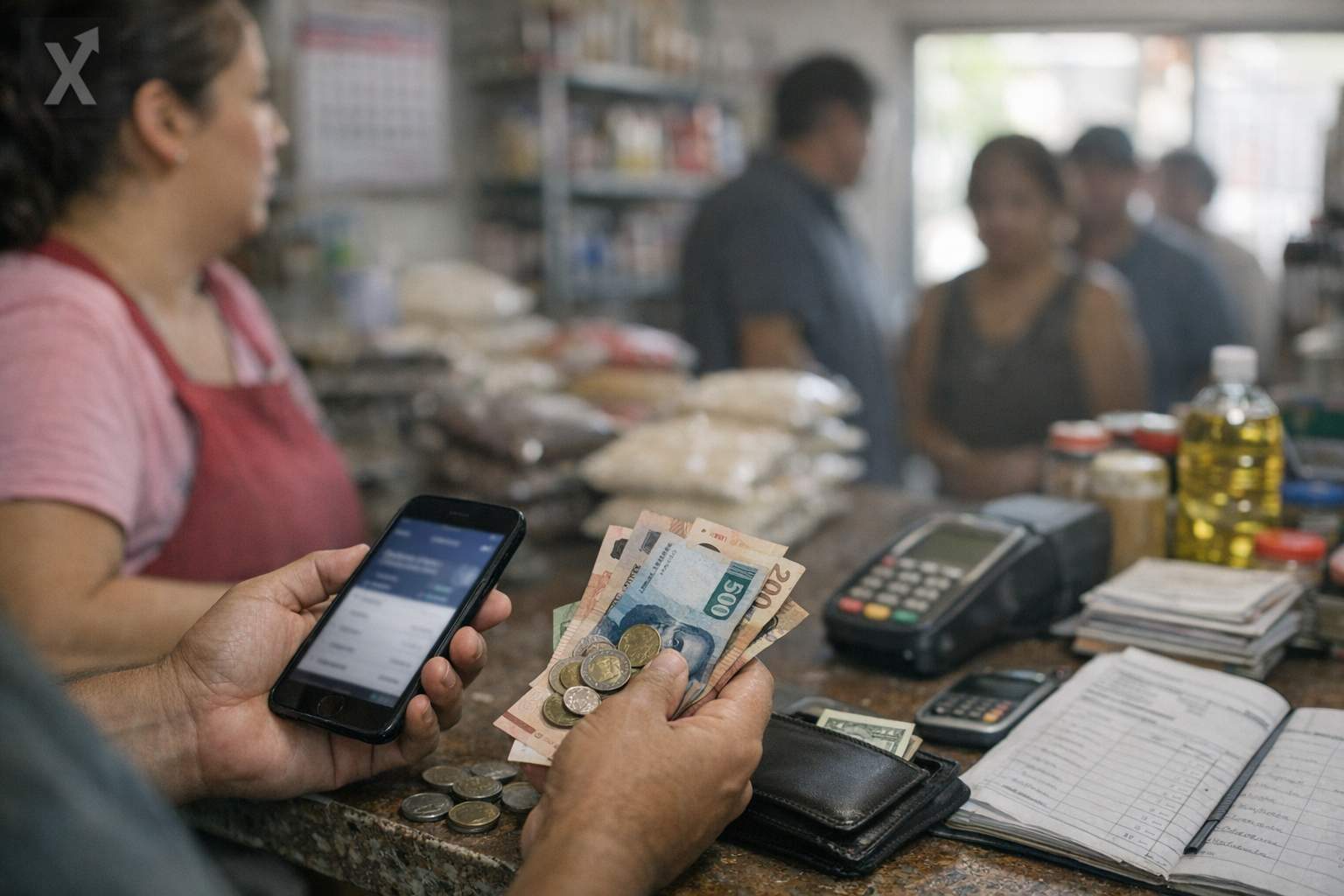
After a 2025 marked by the steepest drop in remittances in more than a decade, economists and research teams at financial intermediaries agree that Mexico has entered a “normalization” phase for remittance inflows, with slower growth rates as the decade winds down. The central takeaway is that the extraordinary cycle seen from 2020 to 2024—driven by stimulus, an atypical labor market abroad, and a U.S. dollar above 20 pesos during several periods—is unlikely to repeat in the near term.
In 2025, Mexico received $61,791.2 million in remittances, its lowest level since 2022, with an annual decline of roughly 4.6%. While the total remains high by historical standards and continues to provide liquidity to millions of households, the pullback raised alarms because of its regional impact: in several states, remittances act as a buffer for consumption, supplement labor income, and support spending on food, housing, health care, and education.
For 2026, forecasts range from a modest rebound to near-nominal stagnation. The consensus is that even with a recovery of around 3% in the best-case scenario, it would not fully offset the previous decline. At its core, the expectation is that flows will settle into a plateau—with seasonal peaks such as May (Mother’s Day) and the back-to-school period—but without easily returning to a sustained level above $60 billion, unless unusual positive shocks emerge in employment and wages for the migrant community.
The main risk factor still comes from the United States: a slowdown in the labor market, particularly in migrant-labor-intensive sectors such as construction and certain manufacturing industries, reduces disposable income available to send money home. On top of that is tighter immigration policy under the Donald Trump administration, with increased border enforcement, interior operations, and a deportation dynamic that—while variable—tends to raise uncertainty and alter financial decisions among migrant households (for example, holding onto cash in a higher-risk scenario).
Another key component is the exchange rate. The peso’s appreciation in 2025—from levels near 20.56 per dollar to around 18.11 by year-end—meant that even if similar dollar amounts were sent, recipients in Mexico received fewer pesos. In practice, this reduces the purchasing power of recipient families and can “cool” local consumption, especially in municipalities with a high dependence on remittances. It also puts pressure on small businesses tied to local demand (shops, services, and some retail activities), which often feel adjustments in disposable income quickly.
This remittance regime shift is also arriving at a complicated moment for Mexico’s economy: inflation has eased from prior-year peaks, but the cost of living remains high for lower-income households; the labor market remains relatively solid, though challenged by informality; and interest rates, even with room for gradual cuts as inflation continues to cool, remain high in real terms—making consumer credit more expensive and limiting momentum in some sectors. In that environment, remittances stop being an expanding engine and instead become a steadier, but less dynamic, support.
Looking ahead to 2026–2029, analysts argue the normalization process could extend for several years. The base case assumes low growth, with bouts of volatility driven by external factors: U.S. immigration policy decisions, shifts in wages and employment, and fluctuations in the Mexican peso. Domestically, the challenge will be for consumption and investment at home to make up for weaker remittance traction—especially in recipient regions—through formal job creation, higher productivity, and financial inclusion mechanisms that help channel part of these flows into savings and investment (for example, housing, education, or microenterprises) without taking on excessive risk.
In short, remittances remain a pillar for household finances and foreign-exchange inflows, but the “boom” appears to be over: the outlook for the coming years points to marginal growth and greater sensitivity to the U.S. economic and political cycle, as well as to exchange-rate movements.






