Four key states and a silent risk: how insecurity is squeezing 5.5 trillion pesos of GDP
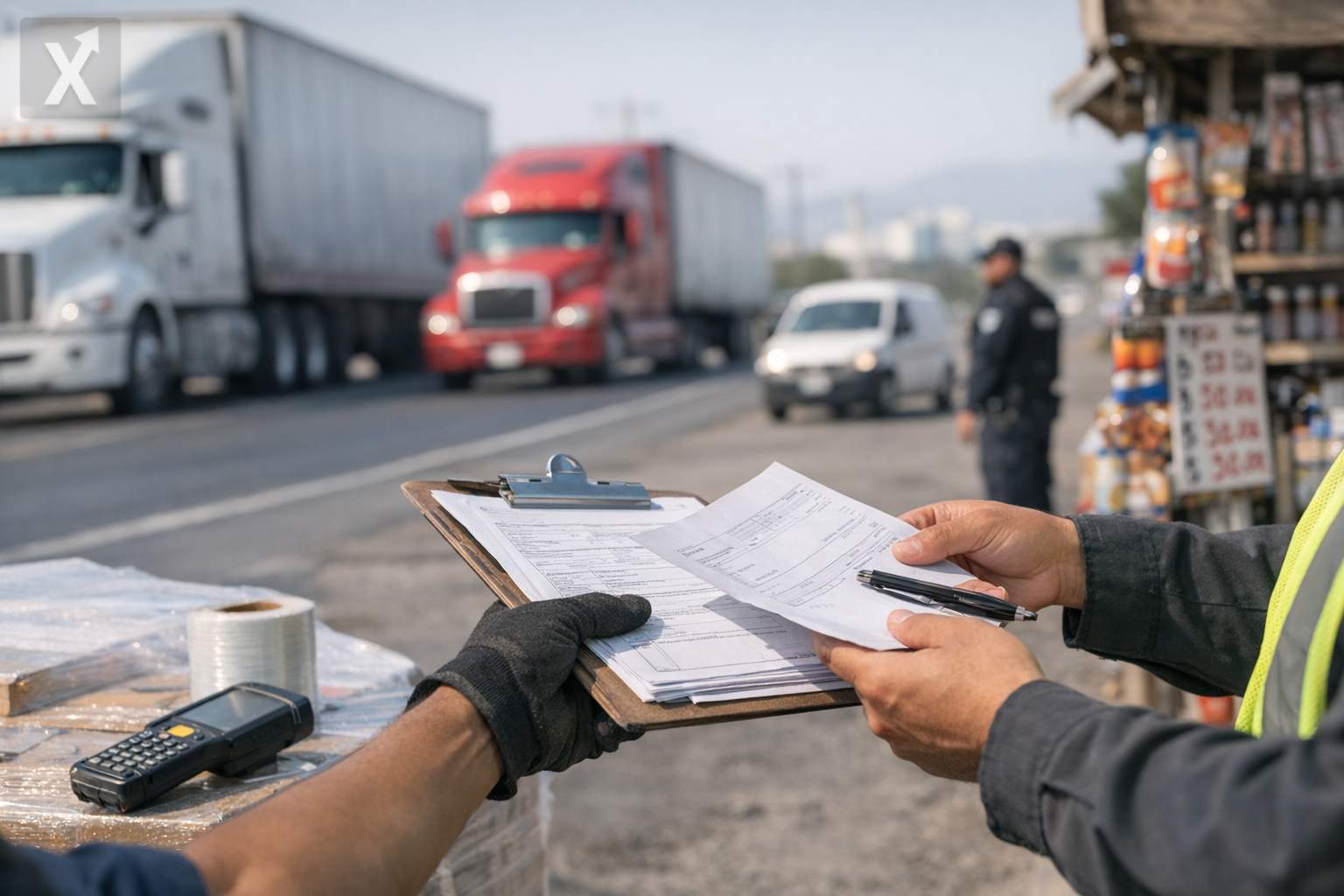
Violence tied to extortion and cargo theft on major routes is driving up costs, deterring investment, and straining supply chains in regions that account for one-sixth of the economy.
The recent takedown of a criminal leader linked to the Jalisco New Generation Cartel (CJNG) puts the spotlight back on a reality that goes beyond the public safety agenda: the economic weight of the territories where the group has maintained a presence or fought key disputes. Jalisco, Guanajuato, Michoacán, and Tamaulipas together generate roughly 5.5 trillion pesos in Gross Domestic Product (GDP)—about one-sixth of Mexico’s economy—with a heavy concentration in export manufacturing, agribusiness, energy, logistics, and cross-border trade.
The issue is not only violence itself, but how it translates into operating costs and business decisions. In Mexico, the crimes that most “move the needle” economically tend to be extortion and highway robbery: they hit margins, force companies to reorganize routes and schedules, raise insurance costs, and require growing spending on protection and monitoring. In practical terms, they increase the structural cost of doing business—especially for small and midsize companies with less ability to absorb shocks.
In recent years, multiple databases and research centers have pointed out that criminal violence has diversified into local illicit economies—protection rackets (cobro de piso), fuel theft, territorial control, and pressure on production chains—with effects that show up in the final price of goods, the continuity of supply, and the viability of investment. At the same time, the public debate intersects with a moment when Mexico is trying to capitalize on the reshuffling of global supply chains (nearshoring) and increase investment in high value-added sectors; when insecurity affects logistics corridors, energy, or agro-exports, it becomes a competitiveness issue.
According to measurements cited in the Mexico Peace Index 2025, the economic impact of violence in the country was estimated at 4.5 trillion pesos in 2024—equivalent to 18% of GDP—with a per-capita cost above 33,000 pesos. Beyond the figure—which includes direct and indirect costs—the data illustrates the scale of resources devoted to containment (security, losses, disruptions, insurance) instead of productivity, innovation, or expansion.
Within this map, the four states mentioned function as economic nodes. Their relevance is not limited to their size: they connect export routes, supply strategic inputs, concentrate industrial clusters, and host sectors with strong multiplier effects on jobs and consumption. When risk rises at critical points, the impact spreads through supply and service chains.
Corridors, energy, and agro-exports: the “tax” of operating under risk
The pressure of insecurity does not show up the same way in every region, but it often concentrates where there is value to capture: goods in transit, energy assets, agro-industrial economies, and territories that control key transit points. Jalisco has consolidated itself as a manufacturing and logistics platform, with significant exports and an investment-attraction agenda tied to electronics and semiconductors; in that context, any disruption to routes, warehouses, or distribution can translate into added costs and heightened scrutiny from corporate headquarters operating under strict business-continuity standards.
Guanajuato, for its part, combines an export-oriented automotive network with sensitive energy infrastructure in areas such as Salamanca, where the presence of a refinery and pipelines makes the region more vulnerable to fuel theft and extortion. The typical consequence is not an overnight “blackout” in investment, but an accumulation of frictions: higher security spending, audits, custody requirements, and pressure on carriers and local suppliers who end up passing along part of the cost.
In Michoacán, agribusiness—symbolized by avocados—has for years faced a dynamic of illegal payments and territorial control that functions as an “informal tax” on growers, packing plants, and outbound logistics. In practice, this distorts markets, reduces incentives to formalize, and limits the capacity to reinvest in modernization, traceability, and plant health—right as international markets demand ever-higher standards.
In Tamaulipas, economic value runs through the border: foreign-trade corridors, the maquiladora industry, and freight transport. Cargo theft and pressure on key routes can trigger logistical detours, longer delivery times, and higher insurance premiums, undermining the reliability required by “just-in-time” models. For an economy so tightly integrated with the United States market, fragility at these points also becomes a regional competitiveness issue.
Specialists have warned that these costs tend to deepen inequality: large companies can pay for armored protection, tracking technologies, and legal counsel; small businesses, by contrast, operate with thinner margins and are more exposed to shutdowns, informality, or displacement. The result is less healthy competition and a more concentrated local economy, with weaker dynamism and productivity.
Looking ahead, the economic impact of insecurity will be determined on two fronts. One is immediate: securing routes, distribution centers, industrial zones, and energy corridors to reduce losses and costs. The other is institutional: improving investigative capacity and prosecution of crimes such as extortion, as well as strengthening reporting mechanisms and protections for business victims—without which the “criminal tax” becomes normalized and gets built into the price structure.
In an environment where Mexico is trying to attract investment and increase domestic content, the operational stability of these states is a factor influencing location and expansion decisions and the development of production linkages. The economy may continue to grow on the momentum of exports and consumption, but persistent violence tends to eat away at part of that gain through hidden costs.
In sum, Jalisco, Guanajuato, Michoacán, and Tamaulipas not only represent a substantial share of GDP: they also concentrate risks that make producing, shipping, and investing more expensive. Reducing extortion and cargo theft on key routes would be—not only a security goal—but also a high-impact economic policy for productivity and competitiveness.