SAT Reopens Nearly All of Its Offices After Violence-Related Closures; Suspension Continues in Puerto Vallarta
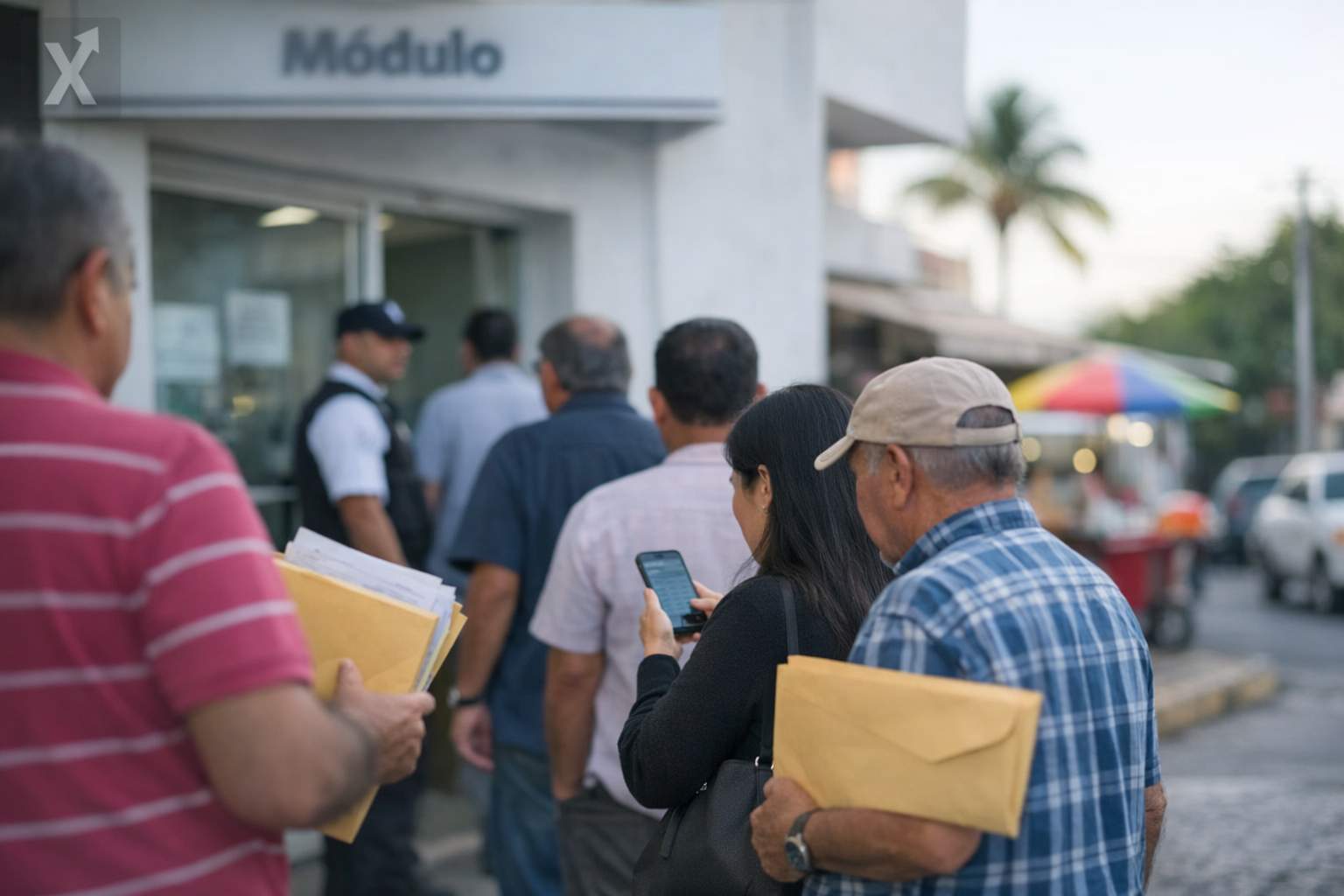
Resuming services at 167 SAT offices reduces the appointment backlog, but the continued closure in Puerto Vallarta keeps pressure on taxpayers and local economic activity.
Mexico’s Tax Administration Service (SAT) resumed in-person service this Tuesday at 167 offices and Taxpayer Service Modules (MST) nationwide, following a temporary suspension that affected facilities in western Mexico. The tax authority kept the Puerto Vallarta, Jalisco module closed and said confirmed in-person appointments at that location will be rescheduled once service is restored.
Monday’s disruption at offices in Jalisco, Michoacán, Nayarit, and Colima took place amid an escalation of violence in the region. For taxpayers, the temporary shutdown meant delays in time-sensitive procedures such as renewing the e.firma (electronic signature), registering and updating the RFC (federal taxpayer registry), obtaining proof of tax status certificates, and resolving issues related to refunds and compliance.
Restoring operations at most modules is intended to contain the appointment backlog and prevent bottlenecks that, during periods of high demand, can translate into administrative costs for individuals and businesses. In an economy where formality remains a structural challenge, uninterrupted access to public tax services is a key operational factor for invoicing, hiring, and access to credit—especially for microbusinesses that depend on tax documentation to work with corporate clients or the government.
Economic impact: compliance, cash flow, and formality amid a slowdown
Beyond scheduling logistics, the partial SAT suspension highlights an important friction point: when tax service windows are interrupted in specific cities, taxpayers’ ability to comply—and in some cases, to operate—gets delayed. Renewing the e.firma and obtaining official certificates, for example, are often required to file returns, enable digital tax stamps, or unblock refunds. In practical terms, this can affect the cash flow of businesses waiting on tax refunds, as well as the continuity of suppliers that need up-to-date tax documentation in order to invoice.
The impact is especially acute in tourist destinations like Puerto Vallarta, where services, retail, and small businesses converge amid high turnover and seasonal activity. A prolonged closure can push taxpayers to travel to other modules—adding time and transportation costs—or to postpone procedures, increasing the risk of backlogs and penalties for unintentional noncompliance. At the same time, for the authority, keeping in-person service available helps sustain tax collection and supports the transition to digital processes—at a moment when Mexico’s economy is showing signs of slower growth and financial conditions remain shaped by relatively high interest rates and moderating domestic demand.
In this context, continuity in SAT services is also a matter of institutional trust. Tax collection in Mexico depends heavily on administrative efficiency and voluntary compliance; repeated disruptions can raise compliance costs and, by extension, hinder formalization. For that reason, the near-total reopening of modules aims to normalize day-to-day interactions between taxpayers and the authority, even as regional risk pockets persist.
For questions and guidance, SAT has reiterated the use of its support channels, including phone assistance and chat tools, to avoid unnecessary travel and route procedures that can be handled remotely. However, in practice, certain processes still require an in-person visit, so reopening the remaining module will be decisive in easing local demand.
In short, restarting operations at 167 SAT offices reduces the immediate impact on tax compliance, but the closure in Puerto Vallarta remains a pressure point for taxpayers and local businesses. Regional security developments and the ability to reschedule appointments without worsening backlogs will be key to limiting indirect economic costs and sustaining administrative normalcy.






