Record U.S. Trade Deficit Rekindles the Debate Over Tariffs and Their Effects on Mexico

The U.S. external imbalance and its tariff pivot are once again putting supply chains—where Mexico is a key partner—under the microscope.
The United States’ (U.S.) trade deficit moved back to the center of the global economic conversation after posting a new record in 2025, according to official figures. While the overall imbalance in goods and services showed only a marginal change from the prior year, the data underscore that the broad-based tariffs pushed by Donald Trump’s administration have not—at least for now—managed to reverse the structural gap between imports and exports in the world’s largest economy.
For Mexico, this is no small matter: the Mexican economy is deeply integrated into North America’s manufacturing flows. Shifts in U.S. trade policy—especially when they involve broad tariff hikes or “domestic content” measures—tend to ripple into investment decisions, inventory planning, and demand for intermediate inputs in sectors such as autos, electronics, and machinery and equipment.
Data released by the U.S. Department of Commerce showed the goods deficit at $1.24 trillion in 2025, a slight increase from 2024. By contrast, when services are included, the total deficit edged down to $901.5 billion. In December, the deficit widened due to a combination of lower exports and higher imports, with notable moves in industrial supplies and capital goods.
In the background, higher tariffs—which pushed the U.S. average effective tariff rate to levels not seen since the 1930s—have reshuffled short-term incentives, but they have not necessarily changed structural drivers such as domestic saving, consumption, investment, and the real exchange rate. For Mexico, the key takeaway is how value chains are being reshaped and how durable the “nearshoring” boost will be under a more rigid trade environment.
Implications for Mexico: Exports, Nearshoring, and FX Volatility
In Mexico, export performance depends heavily on the U.S. industrial cycle, especially in manufacturing. A large U.S. deficit often reflects strong domestic demand and high import levels, which can support orders for Mexican plants; however, when that dynamic comes alongside broad-based tariffs or greater trade discretion, the effect can be mixed. On one hand, Mexico could gain share if companies replace faraway suppliers with regional production; on the other, compliance costs rise, regulatory uncertainty increases, and the risk of retaliatory measures grows—potentially disrupting cross-border flows.
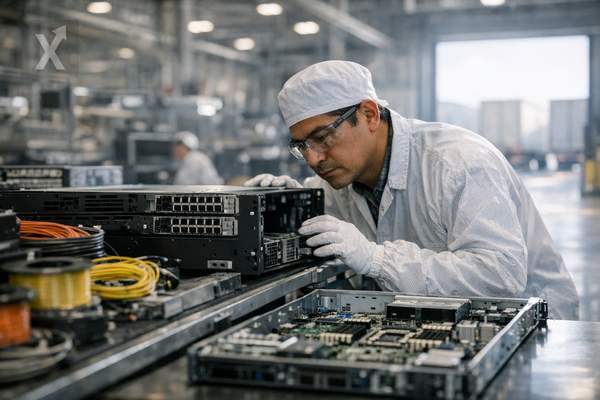
The auto industry is a good example: regional integration means the impact doesn’t stop at one country’s border. A broad tariff on components or equipment can raise costs across the chain, squeeze margins, and accelerate shifts in logistics and sourcing. In electronics and telecommunications, the December jump in U.S. capital-goods imports points to an investment cycle that could benefit Mexican suppliers, though the outcome will hinge on specific rules, origin certifications, and adjustment timelines.
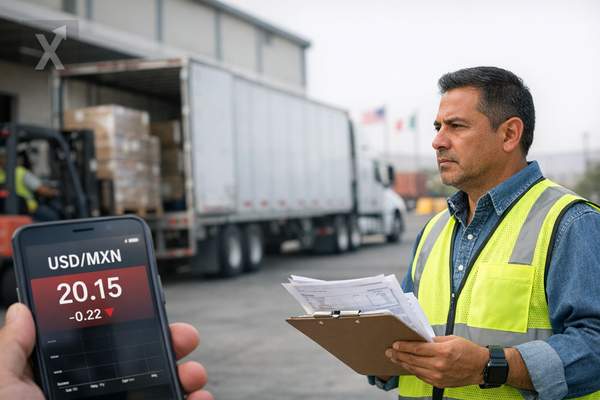
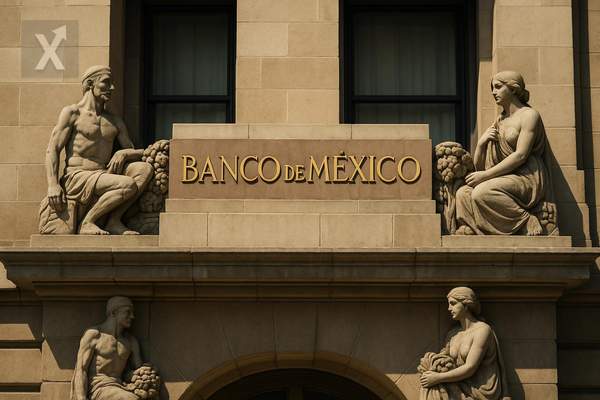
On the financial side, trade uncertainty often shows up as bouts of greater peso volatility against the U.S. dollar (USD). For Mexican companies with foreign-currency debt or imported inputs, sharp exchange-rate moves can reshape cost structures and hedging decisions. At the macro level, Banco de México closely monitors these shocks because of their potential impact on inflation—through imported goods and expectations—especially when they coincide with pressure in energy, logistics, or food.
Another factor to watch is the evolution of the U.S. bilateral deficit with China, which fell on a full-year basis, according to the data. A smaller deficit with China, amid trade tensions that ebb and flow, can encourage suppliers to realign toward North America. Mexico has sought to capitalize on that trend through new industrial parks, expanded border infrastructure, and greater supplies of energy and water in manufacturing hubs; however, bottlenecks remain in power transmission, permitting, security along logistics routes, and the availability of technical talent.
Looking ahead, the net effect on Mexico will depend on whether U.S. trade policy leans toward broad-based tariffs or more targeted strategies, as well as on coordination under the USMCA framework. For the Mexican market, the base case typically combines relocation opportunities with the risk of regulatory shocks—making it essential for companies and state governments to improve certainty, infrastructure, and compliance capabilities.
In short, the record U.S. trade deficit confirms that tariffs alone are unlikely to fix macroeconomic imbalances, but they do reshape incentives. For Mexico, the challenge is to turn regional integration into investment and productivity—without losing sight of volatility risks and new trade frictions.