Banxico Opens Public Consultation on New Rules to Standardize Digital Payments and Strengthen SPEI
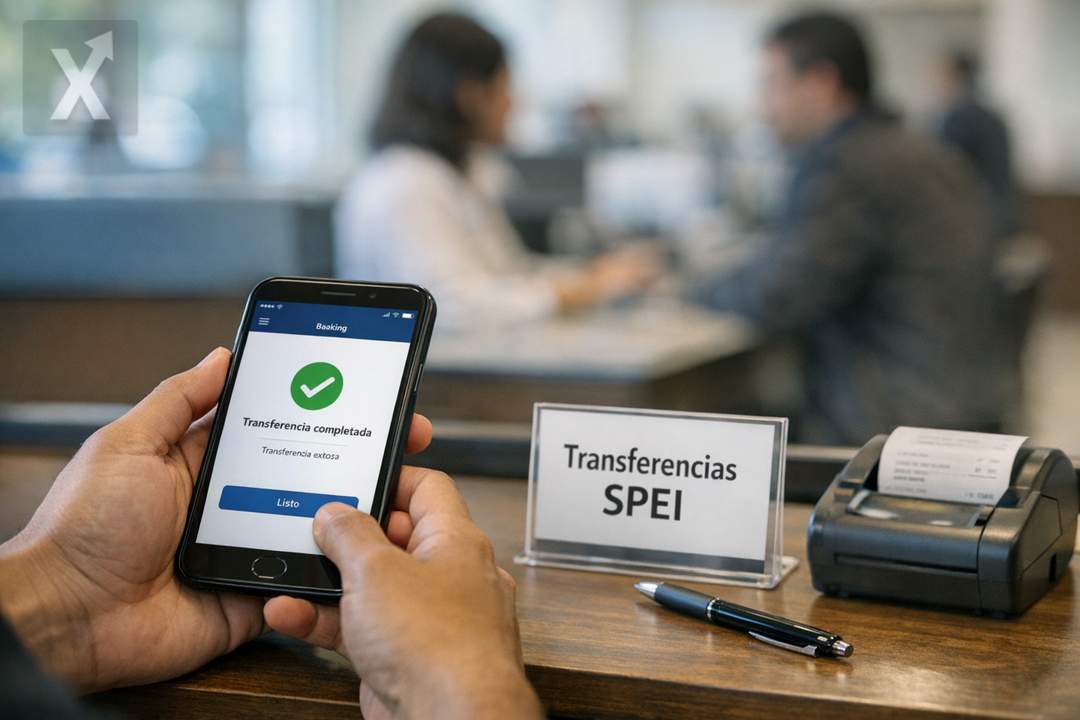
Banxico wants transfers to be simpler and more comparable across banks, with shared technical rules to improve the user experience and consumer protection.
The Bank of Mexico (Banxico) has launched a public consultation to update and streamline digital payment methods, aiming to make sending money a more intuitive, faster, and more consistent process across institutions. The announcement came during the 89th Banking Convention, where Governor Victoria Rodríguez Ceja presented the initiative as part of a strategy to promote the sound development of the financial system and raise efficiency and transparency standards across the payments ecosystem.
The regulatory proposal seeks to set uniform technical and user “navigation” guidelines for banks and participants in the Interbank Electronic Payments System (SPEI). In practice, this is meant to reduce friction in transfers—from how data is entered, accounts are validated, and confirmations are displayed, to interoperability criteria—so users face fewer operational differences across apps and platforms.
Banxico framed the consultation around three strategic tracks: improving transparency and consumer information services, increasing competition in service provision, and comprehensively safeguarding users’ interests. The economic rationale is straightforward: in a market where digital payments are rapidly scaling, the costs of confusion, mistakes, and information asymmetries can translate into lower adoption, more disputes, and barriers to entry for new competitors.
The discussion comes as Mexico accelerates its shift toward electronic payments. The expansion of real-time transfers, the digitization of commerce, and the rise of mobile banking models have increased SPEI’s importance as critical infrastructure. At the same time, cash still plays a major role in everyday transactions, so the simplification agenda also aims to make digital use easier for segments with less technological familiarity—without sacrificing security.
In this context, Othón Moreno, Banxico’s Director General of Payment Systems, said transfer-based payment volumes could surpass credit and debit card payments this year. If that trend is confirmed, it would mark an inflection point: transfers would not only compete as a low-cost alternative, but become the leading transaction channel by number of operations—affecting fees, business models, and customer acquisition strategies for banks and other participants.
Competition, costs, and risks: what’s at stake
Standardization can have direct effects on competition and costs. On one hand, common rules make it easier for users to compare options, switch providers, and more clearly understand the service they receive—pushing institutions to improve quality and pricing. On the other, a more consistent user experience reduces operational errors—such as incorrect data entry or confusion when identifying accounts—and can lower costs tied to dispute resolution and fraud. Still, progress also requires investment in technology, cybersecurity, and operational continuity. For smaller entities, the challenge will be meeting the requirements without undermining their viability, while for the regulator the balance will be raising the bar without stifling innovation.
From a macroeconomic standpoint, stronger digital payments support greater transaction traceability and more efficient money circulation, which can help formalization and improve productivity in cash-heavy sectors. At the same time, a more widely used and more interconnected payments infrastructure makes it essential to reinforce fraud-prevention protocols and incident response, since disruptions or vulnerabilities could quickly ripple through the real economy.
Looking ahead, the consultation process will be key to fine-tuning the changes: the final impact will depend on technical specifics, implementation timelines, and the ability to coordinate with banks and other participants. In an environment where consumption, digital commerce, and fintech competition are driving modernization, Banxico’s proposal aims to make the experience of transferring money in Mexico simpler and safer, while keeping user protection front and center.
In short, Banxico is seeking to cement SPEI as the backbone of everyday payments through shared standards that promote transparency, competition, and security; the challenge will be executing the transition without driving up unnecessary costs or slowing innovation.






