Mexican Agriculture Under Scrutiny Ahead of the USMCA Review in 2026: Seasonality, Costs, and Food Safety Strain the Trade Relationship

The countdown to the 2026 review of the United States–Mexico–Canada Agreement (USMCA) is already reshaping priorities in regional trade, and Mexico’s agri-food sector is emerging as one of the most sensitive fronts. In Washington, producer organizations and business groups have called for the agreement’s evaluation to be used to set limits on seasonal imports from Mexico—particularly fruits and vegetables that compete directly with harvests from the southern and western United States.
The issue was reflected in a report submitted to Congress by U.S. Trade Representative Jamieson Greer, which incorporates comments received through a public consultation. The report argues that the export “success” of Mexican agriculture—supported by logistical proximity, a year-round supply, and lower labor costs—has become, for certain U.S. producers, a competitiveness problem that combines overlapping seasons, food-safety rules, and environmental regulatory tensions.
One of the most frequently cited cases in these discussions is blueberries. U.S. producers say imports from Mexico grew sharply over the past decade and that a meaningful share is concentrated between March and May, overlapping with the key marketing window for states such as Georgia and Florida. In a market where much of the crop is sold as fresh fruit and depends on quick turnover, that seasonal overlap translates into downward pressure on prices and a higher risk of losses for farmers operating with higher cost structures.
At its core, the debate is also fueled by the labor gap. In the United States, labor-intensive agriculture often relies on the H-2A temporary worker program, which involves government-set wages as well as associated costs such as transportation, housing, and benefits. On the Mexican side, farm wages are significantly lower, although producers face other pressures: informality, uneven productivity, security challenges in producing regions, and rising costs for energy, fertilizer, and logistics. For U.S. producers, the combination of these factors tilts the playing field; for Mexico, the cost differential has been a lever of competitiveness—but also a politically vulnerable point in negotiations where jobs and the rural vote carry weight.
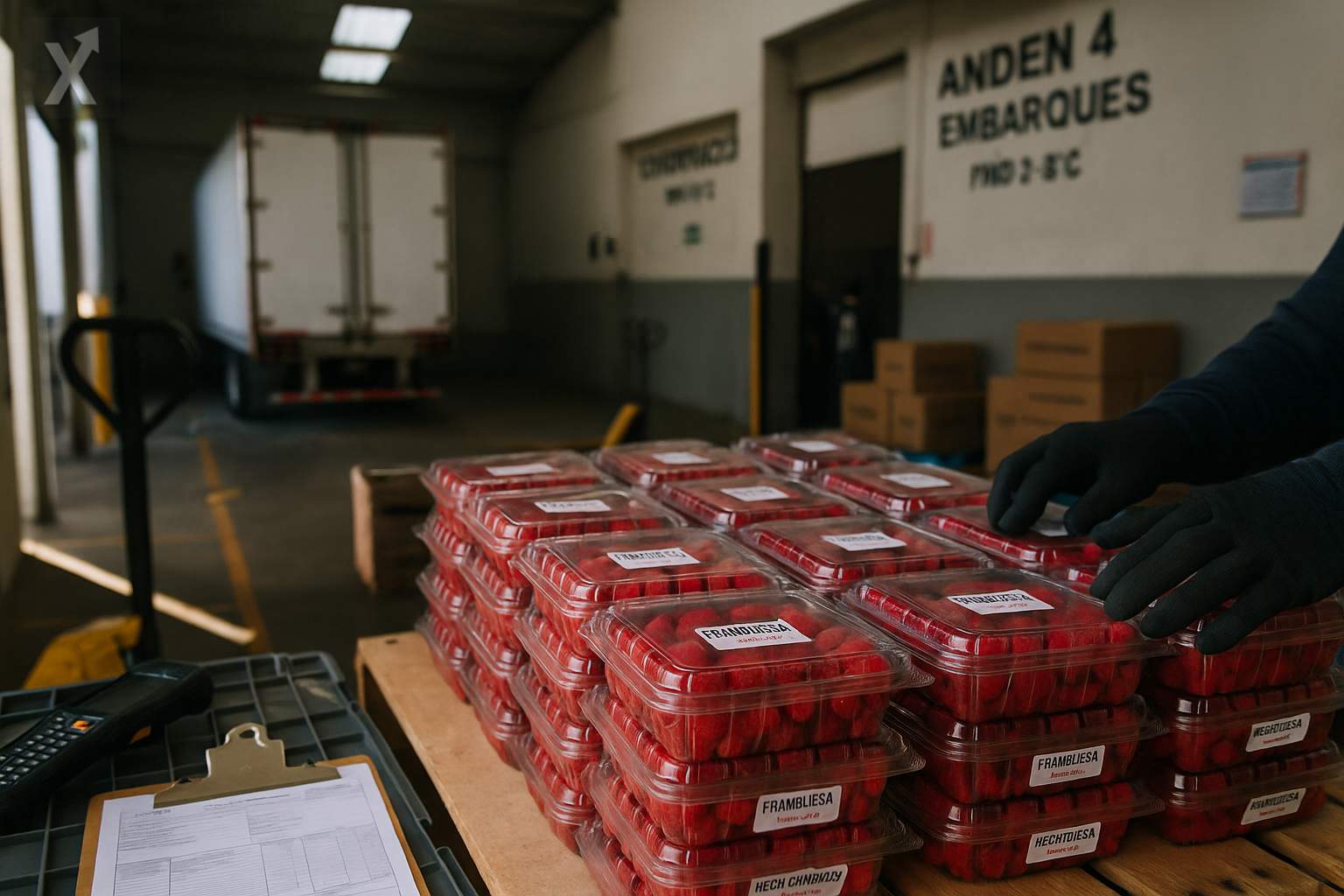
Raspberries follow a similar pattern, with complaints about price differences and market saturation at key moments. These claims come amid a broader backdrop: inflation in agricultural costs across North America, higher input prices after episodes of global disruption, and recurring impacts from extreme weather. In Mexico, water volatility and recent droughts have also affected yields in several regions, pushing investment in modern irrigation and increasing the importance of water management as an economic and competitiveness variable.
Another product that raises political sensitivity is avocados. California producers have argued that the growth of Mexican production and its dominance in the U.S. market put pressure on prices and crowd out local growers. Mexico, for its part, has cemented avocados as an export emblem, with a supply chain that generates foreign currency and jobs—but that also faces scrutiny over deforestation, traceability, extortion, and security in producing areas. The intersection of trade, the environment, and local governance has become an increasingly relevant angle for buyers and regulators.
The food-safety debate adds another layer. In the United States, concerns have been raised about inspection systems and about the number of pest interceptions in certain recent periods, reinforcing arguments by groups seeking tighter controls or conditional access. For Mexico, the risk is significant: a food-safety incident can lead to temporary suspensions, higher compliance costs, and reputational damage. Even so, the country also has incentives to raise standards: the U.S. market remains the main destination for Mexico’s agri-food exports and a key channel for dollar inflows—especially in an environment where national economic growth remains moderate and domestic demand adjusts to the cost of credit.
At the same time, friction is emerging over environmental regulations and agricultural inputs. In Washington, Mexican decisions that restrict or delay import permits for certain agrochemicals have been criticized, with arguments centered on regulatory uncertainty and disruptions to supply chains. Mexico has sought to strengthen its environmental and public health agenda, though the challenge is to do so with clear regulatory pathways and technical backing that reduce the likelihood of disputes. Under the USMCA, the environment chapter and enforcement commitments have gained political weight, suggesting that discussions will no longer be limited to tariffs, but will extend to standards, traceability, and verification.
For Mexico, this is a strategic moment. The agri-food sector has been one of the steadiest export engines, in part due to logistical integration with the United States and consistent demand for food. However, the 2026 review could open the door to pressure to apply “seasonal safeguards,” trade management mechanisms, or new food-safety requirements. Mexico’s likely response will involve strengthening certifications, tightening phytosanitary controls, improving transparency in permitting, and accelerating productivity investments (modernization, cold chain, storage, and transportation), alongside a security agenda for agro-export corridors.
Looking ahead, the landscape will be shaped by three variables: domestic politics in the United States (where agricultural protectionism often has broad support), Mexico’s ability to demonstrate food-safety and environmental compliance with verifiable data, and the farm sector’s resilience in the face of climate, water constraints, and financing costs. If regional integration is meant to consolidate amid the reconfiguration of global supply chains (nearshoring), agriculture will be a stress test: trade can keep growing, but with tighter standards and a more politicized negotiation.
In short, Mexican agriculture enters the USMCA review with clear export strengths, but also with friction points that could turn into tougher market-access conditions. The debate over seasonality, costs, and food safety signals a negotiation in which competitiveness will no longer be measured only by price, but by traceability, regulatory compliance, and institutional capacity to sustain trade without disruptions.