Cetes Kick Off 2026 With Lower Yields, but Still Above Inflation

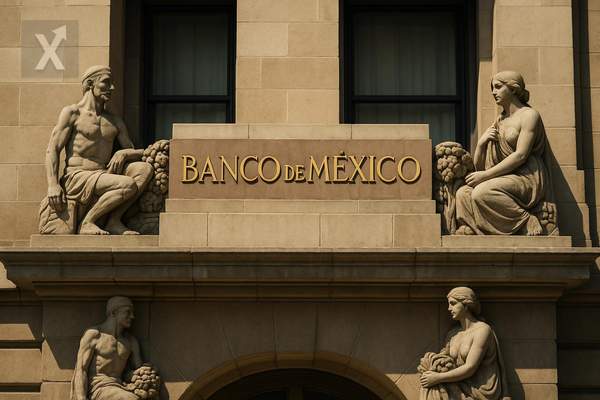
Mexico’s Treasury Certificates (Cetes) opened 2026 with slightly lower yields compared with the end of 2025, as markets continue to price in that Banco de México (Banxico) will keep easing monetary policy at a gradual pace. Even with these adjustments, Cetes remain a key benchmark for low-risk savings in Mexico—especially for people looking to preserve purchasing power without taking on the volatility of more aggressive instruments.
The backdrop is inflation, which accelerated to a 3.72% annual rate in the first half of December, according to INEGI. While that level remains within the range consistent with the price-stability target (3% +/- 1 percentage point), the uptick reinforces the idea that the disinflation process isn’t linear. For investors, this matters because expectations for inflation and the policy rate often feed into yields on government instruments, including the Cetes market.
In the first snapshot of 2026, Cetes showed a yield curve that, while moderating, still offers relatively high nominal returns. The 28-day Cete came in at 7.07%, unchanged from the last auction of 2025. The 91-day tenor fell 0.09 percentage points to 7.15%, while the 182-day instrument was placed at 7.26%. At one year, the yield stood at 7.44%—a level that, in nominal terms, comfortably outpaces the most recent inflation print.
To understand how this instrument works, it helps to remember that each Cete has a face value of 10 pesos, but it’s purchased at a discount: the investor pays less today and, at maturity, receives the full face value. The difference between the purchase price and the amount received is the return. In practice, that means the published rates translate into a purchase price and a gain that is known from the start, as long as the investor holds the security to maturity.
The main appeal of Cetes in the current cycle is that, even though rates have come down from the peaks seen when monetary policy was more restrictive, they continue to offer positive real yields. A simple—though approximate—way to estimate the real yield is to subtract annual inflation from the nominal yield. Using the available data, a 28-day Cete yielding 7.07% versus 3.72% inflation implies a spread of roughly 3.35 percentage points. In reality, the real return depends on how inflation behaves over the investment period, as well as taxes and fees, but the exercise helps illustrate the “cushion” against rising prices.
This context ties into broader trends in Mexico’s economic landscape. In recent years, retail saving and investing in government debt has gained visibility, driven by greater digitization of financial services and households’ preference for relatively safe alternatives. At the same time, the economy faces a mix of forces: moderate growth, sensitivity to U.S. activity—its main trading partner—and a fiscal path that markets are watching closely for its impact on risk premiums and interest rates. In that environment, government instruments often serve as a “floor” to benchmark other returns, from bank promissory notes to mutual funds.
Looking ahead to the next few months, the main focus for Cetes will be the pace and magnitude of any additional changes to Banxico’s policy rate, as well as the evolution of core inflation and external pressures such as the exchange rate, energy prices, and logistics costs. If inflation stabilizes and the economy cools, rates could continue to drift lower; if inflation shocks emerge or financial uncertainty rises, the path could be more cautious. For savers, that translates into a practical trade-off: lock in today’s rates by extending maturities, or stay liquid in short tenors to reinvest as conditions shift.
In short, while 2026 started with slightly lower Cetes yields, rates remain above observed inflation, preserving their appeal as a low-risk instrument. What happens next will depend mainly on the path of inflation and Banxico’s stance—variables that will determine whether investors prioritize the certainty of today’s rate or the flexibility to adjust to a changing environment.