Mexico Heads Into the USMCA Review Facing the Challenge of Defusing U.S. Tariffs on Steel and Vehicles
Mexico is entering the key year for the review of the United States–Mexico–Canada Agreement (USMCA) with an issue that continues to strain the trade relationship: U.S. tariffs on steel, aluminum, and certain vehicles—measures the private sector views as a source of uncertainty for investment and supply-chain planning. Even as bilateral trade remains strong, these duties—justified in Washington under “national security” arguments—have become a significant pending item on Mexico’s economic and diplomatic agenda.
The most sensitive flashpoint is tied to Section 232 of U.S. law, a provision that allows the executive branch to restrict imports when they’re deemed to harm strategic industries. In practice, this tool has worked as a lever for trade pressure, even against partners that have an agreement in place. For Mexico, the problem isn’t only the tariff’s direct cost, but the signal it sends for long-term decisions: any unilateral change in rules governing access to the U.S. market can reshape investment plans in capital-intensive industries.
The most recent data referenced in the base note already show signs in trade flows. Using Banco de México figures cited in the original piece, the value of Mexican steel exports to the United States fell 12% from January through October 2025 compared with the same period in 2024. In the transportation equipment category—where cars, trucks, and other industrial components are grouped—the decline was 7%. While these moves can reflect a mix of prices, demand, and inventory adjustments, the continued presence of tariffs and tariff threats tends to amplify volatility and raise compliance costs.
On the automotive front—one of Mexico’s export pillars—the debate intersects with the level of regional integration the USMCA itself requires. According to the approach cited by Mexico’s Ministry of Economy, certain frameworks allow the tariff burden to be reduced based on the regional or U.S. content built into vehicles. Even so, the industry argues those “discounts” don’t replace the certainty of operating with fully duty-free access. The Mexican Automotive Industry Association (AMIA) has made the complete removal of these kinds of barriers a priority to preserve the competitiveness of Mexico’s export platform.
The source article also notes the imposition of a 25% tariff on imports of medium- and heavy-duty trucks and their parts, as well as a 10% duty on buses, with rules that, in theory, allow units that comply with the agreement to pay tariffs only on non-U.S. content. Even with that safety valve, the impact shows up in higher administrative costs and potential price distortions—especially for companies running complex supply chains on tight margins. For a country where the automotive and auto-parts sector accounts for a substantial share of export value and formal manufacturing employment, the risk is that uncertainty spills into new investment decisions or plant expansions.
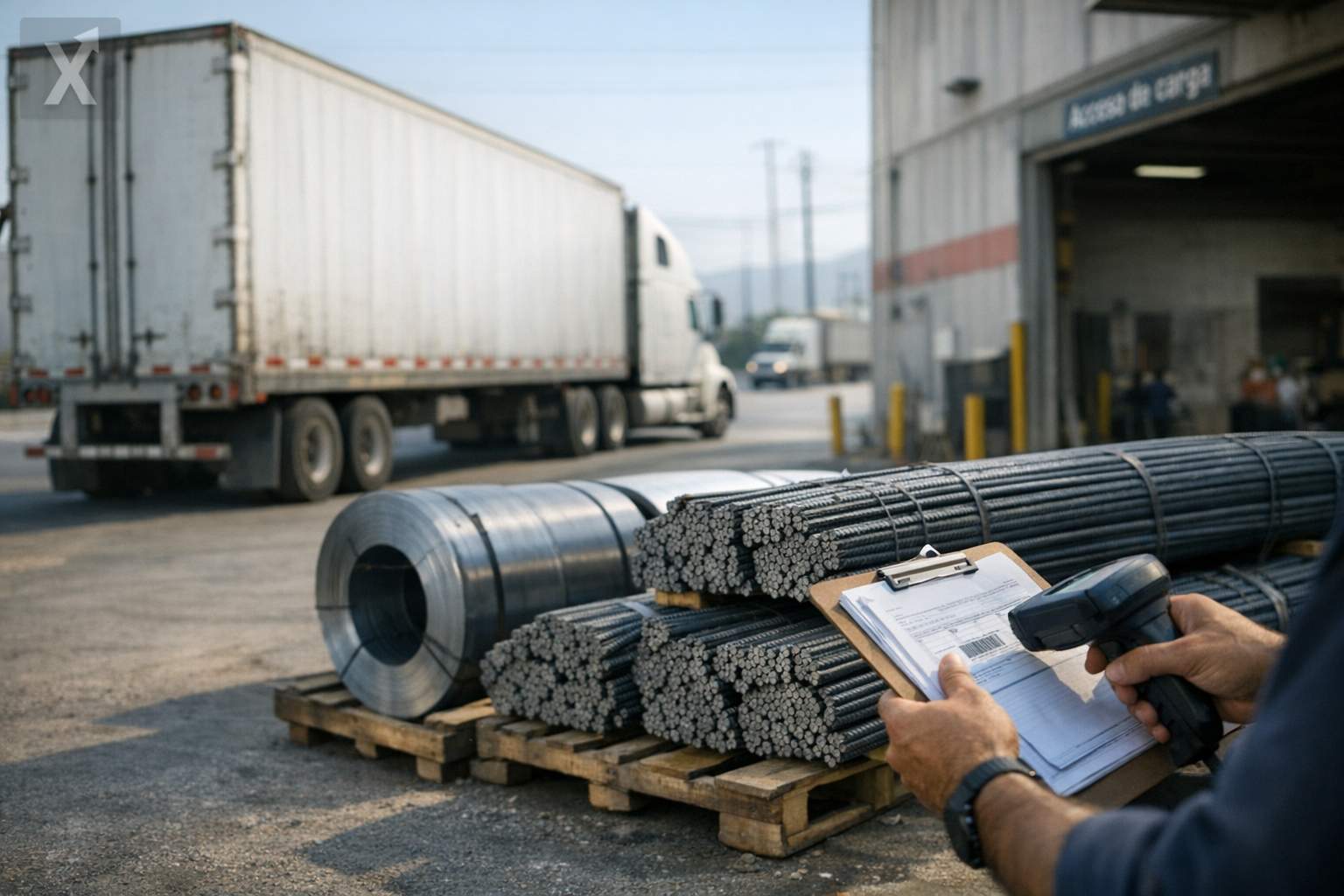
In metals, the tension is even greater. The continuation of a 50% tariff on steel and aluminum—according to the base text—has implications that go well beyond steelmakers: steel is a critical input for auto parts, appliances, machinery, infrastructure, and construction. A sustained increase in costs can feed into industrial expenses or pressure final prices, particularly as Mexico tries to cement “nearshoring” as a driver of North America–oriented manufacturing investment. The paradox is clear: deeper regional integration is being promoted, yet barriers remain on essential inputs.
At the same time, overall Mexico–U.S. trade has shown resilience. The original article notes that, despite tariffs in specific segments, Mexican exports to the U.S. market grew 7% in the first ten months of 2025 versus 2024. This aligns with a structural reality: the USMCA, cross-border logistics networks, and production complementarity continue to support high trade flows even when sector-specific frictions emerge. It also helps that a large share of trade meets rules-of-origin requirements and benefits from the agreement’s preferences, while duties with narrower coverage don’t fully slow the broader picture.
In the background, Mexico is approaching the USMCA review in a complicated economic environment. On one hand, the country retains clear investment advantages: proximity to the world’s largest market, a broad network of trade agreements, deep export experience, and a strong manufacturing base in auto parts, electronics, and equipment. On the other, it faces constraints that shape its ability to capitalize on nearshoring: energy and transmission infrastructure, water availability in industrial hubs, security along logistics corridors, and regulatory certainty. In that context, any sign that access to the U.S. market could become contingent—whether for commercial, political, or legal reasons—carries more weight in investors’ risk assessments.
The USMCA review, built into the agreement’s design, has become a moment for political recalibration. Former negotiators and analysts often agree that Mexico’s central goal will be to preserve the agreement without changes that erode preferential access, while also seeking to neutralize unilateral measures like those under Section 232. On the U.S. side, domestic pressure from industrial and labor interests may increase the temptation to use trade tools to renegotiate terms. On the Canadian side, issues like rules of origin and energy-related disputes are often on the radar. The most likely outcome for markets is an extended negotiation period with bouts of volatility driven by announcements.
Looking ahead, the outcome of these tariffs could affect three areas: (1) investment decisions in manufacturing and metalworking, particularly in export-oriented regions in the Bajío and northern Mexico; (2) production costs and regional competitiveness versus Asia and Europe; and (3) the nearshoring narrative, which depends on stable rules for companies to relocate processes to Mexico. A deal that reduces or removes tariffs would send a message of certainty; if they remain, companies may speed up compliance strategies (more regional content) or redesign supply chains to reduce exposure—at added cost.
In sum, Mexico is heading into the USMCA review with robust trade but with major sticking points in strategic sectors: steel, aluminum, and vehicles. The debate isn’t only about tariffs, but about investment certainty and consistency with a production integration that has taken decades to build. The negotiation outcome will shape how solid the environment is for Mexico to strengthen its role as North America’s export platform in the coming years.