IEPS and Tariffs: New Price Shocks Test Banxico’s Path Toward Its Inflation Target
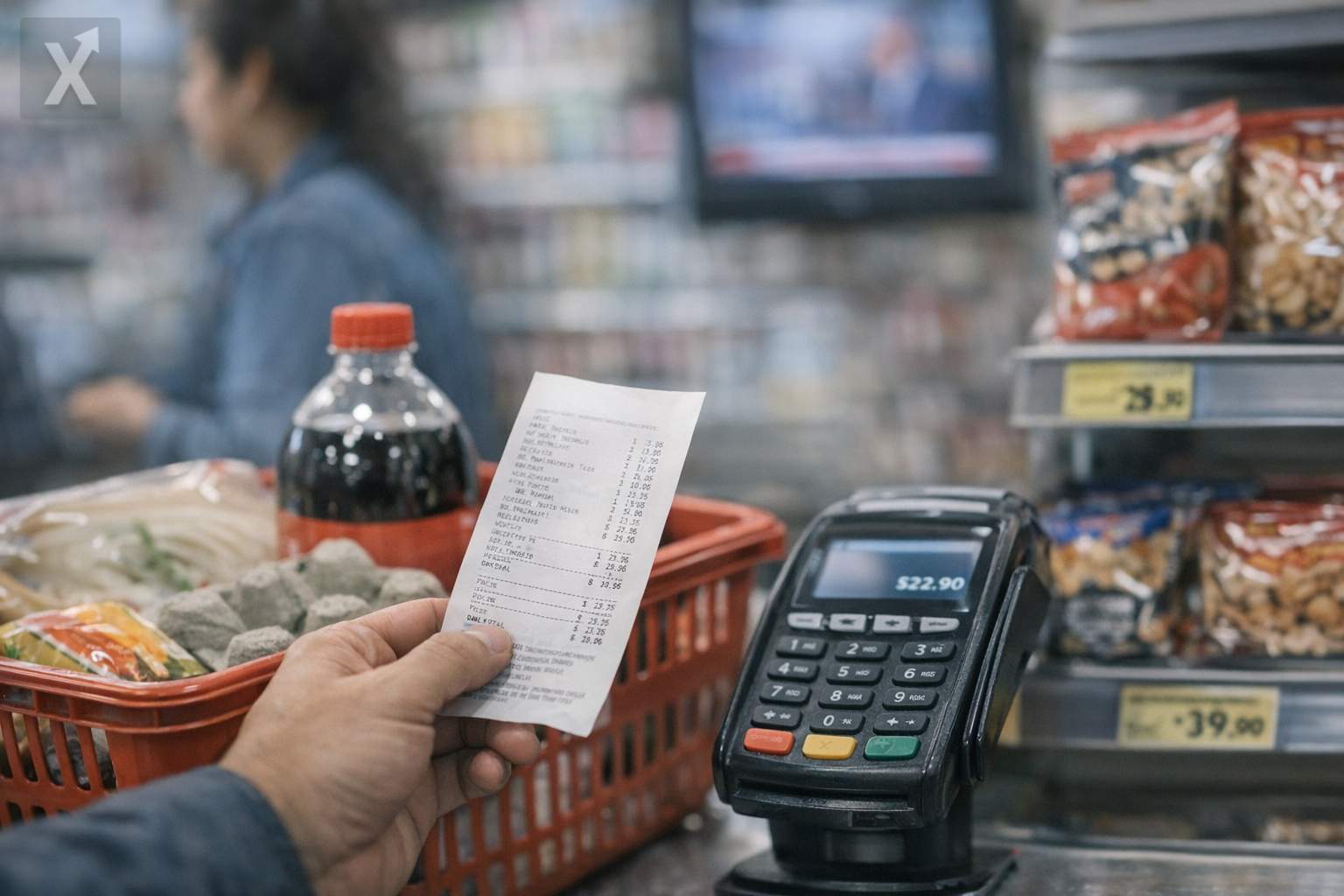
The start of 2026 is shaping up to add another challenge for monetary policy in Mexico: the combination of higher taxes—especially the IEPS excise tax on sugary drinks—and a tightening of tariffs on certain imports, mainly from Asia, could translate into targeted price increases that complicate the disinflation process. In this scenario, analysts in the financial sector expect Banco de México (Banxico) to keep a cautious stance, with the rate-cutting cycle moving forward more carefully, in an environment where the balance of inflation risks has not yet clearly shifted downward.
This debate is taking place at a time when inflation in Mexico has shown stubbornness in clearly converging to the 3% target (±1 percentage point). While headline inflation has cooled from the peaks seen after the pandemic and global energy shocks, the core component—which excludes highly volatile items—is typically the central bank’s key guide, and its trajectory determines how quickly policymakers can ease monetary conditions without reigniting price pressures.
Within the Governing Board itself, one point of focus has been the risk of cutting rates before disinflation becomes more consistent. In recent months, voices such as Deputy Governor Jonathan Heath’s have warned about the mismatch between a declining policy rate and inflation that has not “given in” as clearly as desired—helping explain why the market remains split on when inflation will sustainably return to target.
On the fiscal front, the increase in the IEPS on sugary drinks is shaping up to be an immediate factor in Mexico’s National Consumer Price Index, especially in January and February data, given how quickly it tends to pass through to retail shelves. According to official estimates cited by analysts, the Finance Ministry (Hacienda) expects meaningful revenue from this measure, consistent with a strategy aimed at strengthening tax intake. While these adjustments do not necessarily trigger an inflationary spiral on their own, they do tend to “push” the price level higher in the short term and muddy the monthly read—something Banxico watches closely to assess whether the effects are temporary or whether they bleed into core inflation.
The second source of pressure is coming from foreign trade: new tariffs on certain imported products—with an emphasis on Asian goods—can raise the cost of inputs and finished goods, depending on companies’ ability to switch suppliers, renegotiate contracts, or absorb costs. Analysts note that some industries may have brought inventories forward to soften the initial hit in the first few months, but the impact could resurface as stock levels normalize—especially in supply chains where Mexico relies on imported components for manufacturing, electronics, computer equipment, textiles, or consumer products.
A third element to watch is labor costs. The recent double-digit increase in the minimum wage tends to show up more strongly in labor-intensive services such as restaurants, tourism, retail, and certain personal services. In practice, these categories have been part of inflation’s “hard core,” because their adjustments are usually more persistent and less sensitive to declines in international energy or food prices. If pass-through to prices accelerates, Banxico could find less room to cut rates without putting inflation expectations at risk.
Even with those pressures, the exchange rate remains a central piece of the puzzle. A relatively strong peso versus the dollar helps moderate the peso cost of imports and can partially offset tariff or tax shocks. However, the external backdrop looks more complex: shifts in global monetary policy—for example, rate adjustments in Japan after years of ultra-loose conditions—can reshape flows into yen assets and change risk appetite, with potential spillovers to emerging-market currencies. In addition, the path of the U.S. economy, the interest-rate differential, and bouts of global volatility often transmit quickly to Mexico’s FX market.
For 2026, several research desks expect Banxico to deliver only limited cuts and to keep rates relatively high for longer if headline inflation stays above 4% and, especially, if core inflation fails to fall as expected. At the same time, weak domestic growth—with more selective consumption, private investment that is sensitive to rates, and an industrial cycle tied to U.S. demand—could act as a natural brake on prices, though it is not always enough when there are supply shocks or administered adjustments (taxes, fees, tariffs).
Looking ahead, the challenge will be to distinguish between one-off effects (such as a specific tax) and persistent pressures (services, wages, expectations). If the early-year shocks lift monthly inflation but do not seep into core, Banxico would have room to gradually resume cuts. By contrast, if there is broader pass-through into service prices or non-food goods, the central bank could extend its restrictive tone to protect well-anchored expectations, even at the cost of a slower recovery.
In short, the start of 2026 combines fiscal and trade decisions that may lift prices in the near term, a labor market that keeps pressure on services, and an exchange rate that could either act as a buffer or become a source of volatility. The inflation prints in the first few months will be key to calibrating the pace of Banxico’s rate cuts—and, as a result, the cost of credit for households and businesses.






