Border Mayors Call for USMCA Review to Put the Border at the Center of North American Competitiveness
The Association of Border Mayors of the United States and Mexico presented a package of six proposals to the Office of the United States Trade Representative for the 2026 review of the United States-Mexico-Canada Agreement (USMCA). The group—which brings together cities where over 40% of bilateral trade crosses and represents more than 14 million people—argues that the agreement will only reach its full potential if the border becomes an explicit priority for investment, governance, and implementation. In 2024, trade between Mexico and the United States topped $839 billion, consolidating Mexico’s position as a key partner in the reorganization of supply chains.
Their demands are laid out across six main areas: modernization of ports of entry; environmental cooperation; more streamlined logistics and customs processes; direct participation of local governments in USMCA governance; strengthening of labor conditions; and greater resilience in supply chains. Their appeal highlights that Tijuana–San Diego, Ciudad Juárez–El Paso, Nuevo Laredo–Laredo, and Matamoros–Brownsville are nodes that define the cost, time, and reliability of North American trade—and that decision-making must reflect this reality.
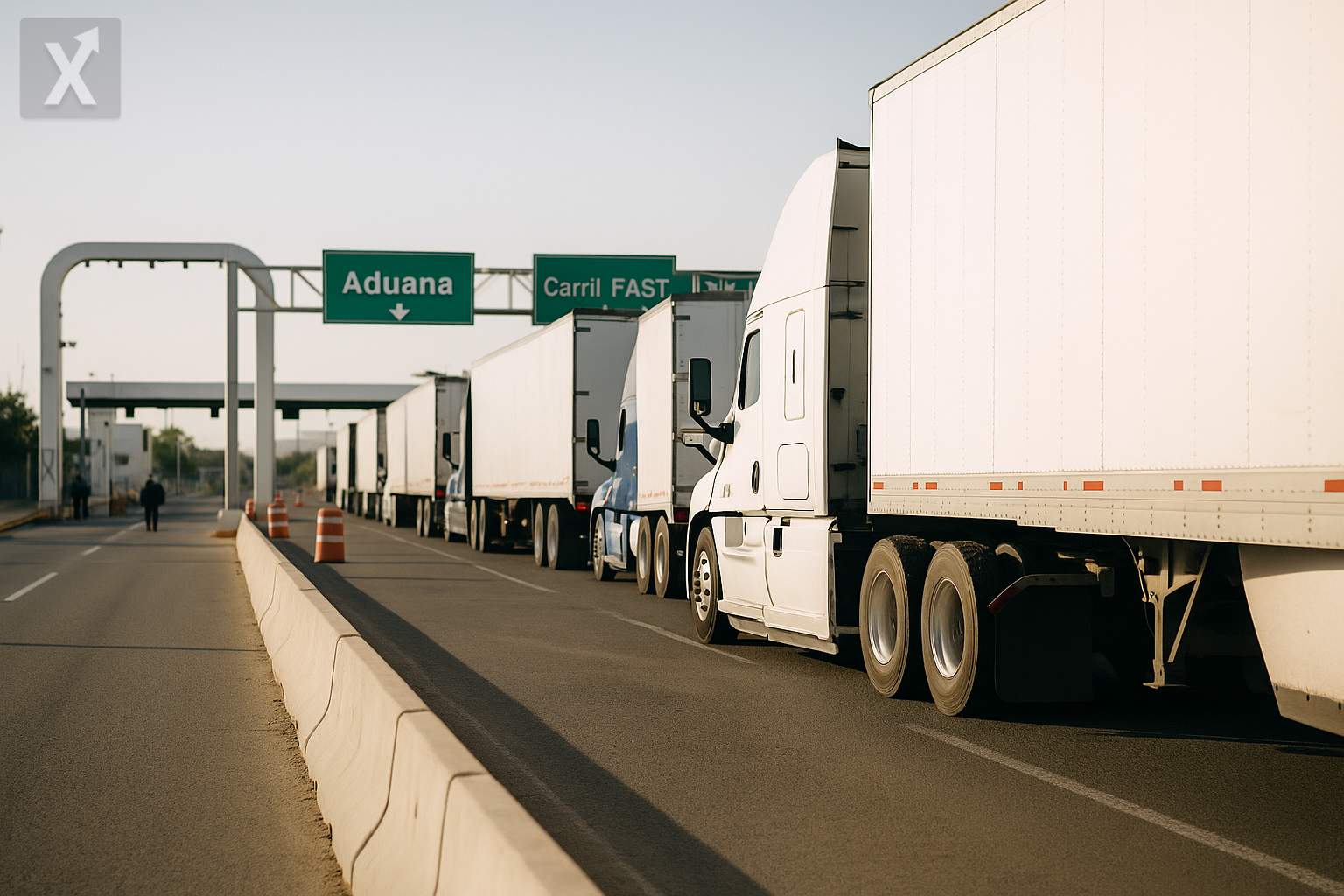
On infrastructure, the mayors point out that outdated facilities, delays, and staffing shortages raise logistics costs by 15% to 20%. They propose a trilateral fund to modernize facilities, 24/7 operations, public targets for crossing times, expansion of FAST lanes and the C-TPAT program, and greater use of non-intrusive inspection technology. Recent experiences with partial closures and personnel reassignments due to migration pressures exposed the operational fragility of some crossings, with direct impacts on exporters, transport companies, and small and medium-sized businesses. Projects—such as the Otay Mesa II port of entry and expansions on the Nuevo Laredo and Reynosa bridges—point the way forward, but require stable funding and binational coordination.
The environmental agenda proposes a Border 2030 program with a minimum annual funding of $200 million, urgent sanitation projects in Tijuana, Ciudad Juárez, and Nogales, and a trinational network for air quality monitoring. Emissions from slow-moving truck traffic and wastewater discharges into the Tijuana–San Diego watershed and the Rio Grande affect public health and productivity. “Green” lanes for low-emission vehicles and coordinated standards would help meet climate targets and reduce costs associated with delays and shutdowns due to environmental emergencies.
On logistics and trade facilitation, the mayors propose a single trilateral manifest, harmonized classification rules, stronger data sharing among agencies, and ongoing training for customs staff. Mexico has made progress with its Single Window (VUCEM) and the digitalization of documentation, while the Carta Porte supplement has increased traceability for ground shipping. However, the lack of interoperability between systems and redundant procedures with the US and Canada continue to create bottlenecks. Streamlining verifications—especially for small and medium-sized businesses—would allow for better use of USMCA rules of origin.
The mayors are also requesting a formal seat at the table in treaty governance through a USMCA Mayors’ Council and the integration of local authorities in environmental, labor, and facilitation committees. They argue that day-to-day implementation happens in their cities: coordinating infrastructure works, land use planning, freight mobility, security, and basic services. In the context of booming nearshoring in Baja California, Sonora, Chihuahua, Coahuila, Nuevo León, and Tamaulipas, binational planning for industrial land, water, and electricity is becoming crucial to support new investment flows.
On labor, the proposal emphasizes joint training with mutual recognition of certifications in all three countries, and resources for effective law enforcement. Since 2021, the USMCA Rapid Response Labor Mechanism has driven improvements in union freedom and collective bargaining in Mexico, raising standards in sectors such as auto parts and manufacturing. However, the shortage of skilled technicians and high turnover at the border require targeted programs with educational systems like CONALEP, technical universities, and community colleges in the cross-border region.
For supply chains, the mayors propose mapping critical links with shared databases, incentives to set up plants in border areas, and simpler customs and verification procedures. The region aims to capitalize on the relocation of industries like automotive, medical devices, electronics, and potentially semiconductors, in sync with industrial policies in the United States. The upcoming USMCA review could reframe rules in sensitive sectors like electric vehicles, requiring regulatory certainty and predictable customs procedures.
The broader macro context supports this diagnosis. Mexico has strengthened its position as the United States’ top trading partner, while fixed investment along the border grows on the back of nearshoring. Challenges remain: backlogs in road and rail infrastructure, congestion at crossings, the availability of energy and water in northern industrial hubs, and high interest rates that make capital more expensive. Coordination between SAT and CBP on process harmonization—alongside investments in inspection and staffing—will be key to turning strong trade performance into sustainable productivity gains.
Looking ahead to 2026, the USMCA review will have to balance ambition with feasibility. Border mayors are laying out a roadmap that ties together infrastructure, environment, governance, and labor skills with the goal of reducing friction and costs. For Mexico, prioritizing ports, digitalization, and talent development at the border could accelerate nearshoring gains and shield regional competitiveness from global disruptions.
In summary, the border is shaping up to be the decisive link in the USMCA: modernizing crossings, addressing environmental liabilities, streamlining procedures, and bringing in local governments could all translate into lower costs, greater certainty, and more resilient supply chains. The challenge is not in the diagnosis, but in execution, funding, and sustained trilateral coordination.






