ABM proposes temporarily removing interchange fees at gas stations to lower card-payment costs
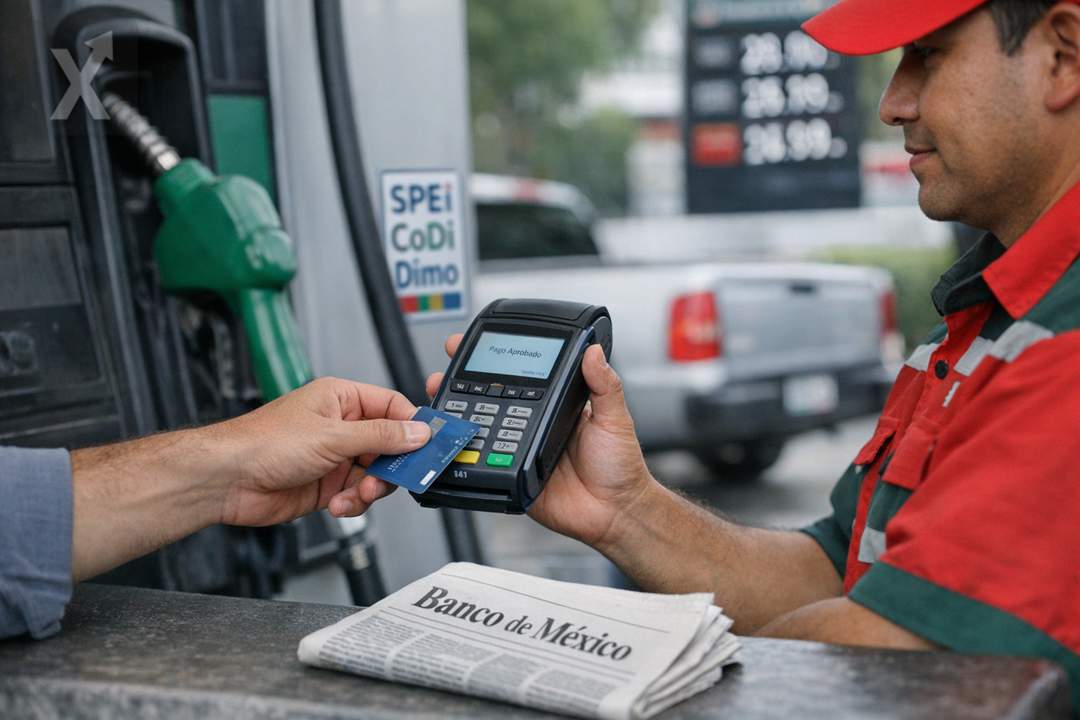
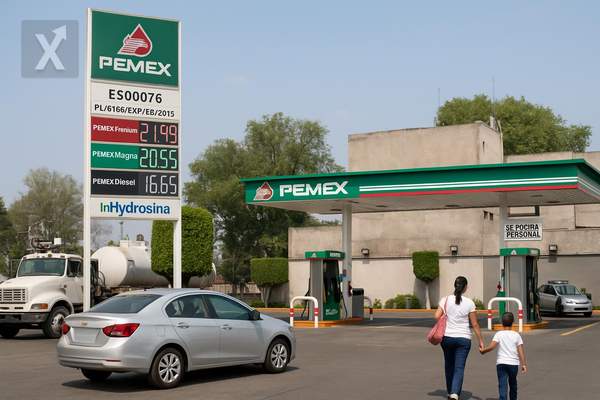
Banks are proposing to eliminate interchange fees at gas stations for a period of time to reduce card-acceptance costs and push digital payments.
The Association of Banks of Mexico (ABM) has put a relief measure on the table for the fuel retail sector: temporarily eliminating the interchange fee generated when a consumer pays with a credit or debit card. The proposal aims to reduce the total cost of accepting electronic payments—which in practice influences the discount rates merchants face—so that this lower cost is reflected in the final price or, at the very least, eases pressure on service-station margins during periods of volatility.
Interchange is a bank-to-bank fee: the merchant’s bank (the gas station’s) pays the issuing bank of the customer’s card. In Mexico, these percentages have been the subject of regulatory debate because they are relatively high compared with international standards and because of the effect they can have on digital payment adoption in cash-heavy industries.
According to public data from the Bank of Mexico (Banxico), maximum fees have reached levels close to 1.91% for credit and 1.15% for debit—figures above benchmarks seen in other jurisdictions. In 2023, the competition authority (Cofece) warned that, on average, Mexico ranks among the countries with the highest fees, which tends to make card acceptance more expensive, particularly for businesses with high transaction frequency and variable average ticket size, such as gas stations.
The proposal was presented during the Banking Convention, at a time when the federal government has reiterated its interest in containing pressure on fuel prices and, in parallel, accelerating payment digitization. The banking sector argued that the incentive—lowering the cost of accepting card payments—could be complemented by greater adoption of instant-payment alternatives such as CoDi and Dimo, with the goal of reducing cash use.
Digital payments, Banxico regulation, and the challenge of passing savings on to consumers
The announcement comes as Banxico is pushing operational adjustments to make the experience of transfers and payments more “uniform” and simpler, through common technical and user-navigation standards among SPEI participants. The economic logic is straightforward: if digital payments become cheaper and simpler, usage rises; if transaction volume grows, traceability improves and costs associated with cash (handling, transport, theft risk, and losses) decline. However, the critical issue will be pass-through. For the temporary elimination of interchange to have a visible impact, the lower cost must show up as an equivalent reduction in the rates charged to merchants or in more competitive pricing decisions. In a market with tight margins and high social sensitivity to gasoline prices, the measure’s credibility will depend on monitoring mechanisms and the ability to show the savings are not being absorbed somewhere within the payments chain.
In the background is the debate over the cost structure of the payments system and its relationship to financial inclusion. Banks insist that cash, while convenient, has drawbacks: it does not build a track record, it limits access to credit, and it facilitates informality. For Mexico’s economy—where a significant share of employment and transactions still takes place outside the financial system—getting the incentives right in high-throughput sectors can accelerate the shift to electronic payment methods.
ABM’s proposal is also tied to a broader agenda: increasing private-sector credit by 2030. President Claudia Sheinbaum highlighted the banking industry’s commitment to raise financing from the equivalent of 38% of GDP to 45% of GDP in the coming years—an objective that, if achieved, could strengthen investment and consumption, though it will depend on competition conditions, interest rates, risk appetite, and the economy’s trajectory. In that sense, payment digitization is often seen as an “enabler”: it improves information, reduces friction, and can lower the cost of originating financial products.
For consumers, the change would mean broader access to card payments without implicit surcharges and a more consistent experience across terminals and transfers. For gas station operators, the incentive is to lower acceptance costs and reduce cash handling. For the financial system, the potential benefit is higher transactional banking penetration and more data that can be used to offer credit and services with greater precision.
Looking ahead, temporarily eliminating interchange fees at gas stations could become a policy pilot for other cash-intensive sectors—such as transportation and toll roads—if it can be shown that the savings are passed through, digital payment usage increases, and the economy’s operating costs decline. The challenge will be aligning incentives and measuring results transparently to keep the initiative from becoming an accounting change with no impact on household budgets.
In short, ABM’s proposal opens a window to reduce friction in everyday payments and accelerate digitization, but its success will depend on whether lower fees translate into real cost reductions for merchants and consumers and whether Banxico consolidates standards that enable mass adoption of electronic payments.