Investment and consumption cool off in February, raising the risk of weaker growth in 2026
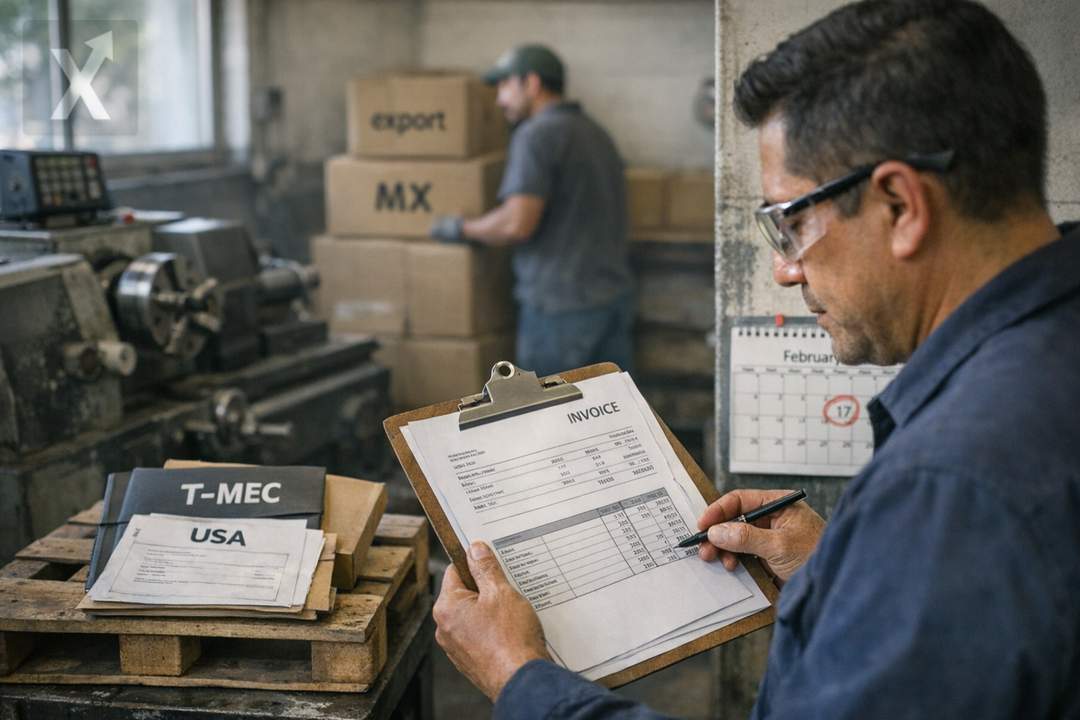
The drop in investment in machinery and the pullback in consumption reflect corporate caution and fading domestic momentum, in an environment shaped by trade uncertainty.
Mexico’s economy showed signs of fragility again in February, confirming a slower start to the year: both gross fixed investment and private consumption fell for a second consecutive month, according to INEGI data. The performance suggests that domestic momentum—key to cushioning external shocks—is weakening amid a mix of trade uncertainty, deteriorating business confidence, and a labor market that is losing steam compared with 2023–2024 levels.
Gross fixed investment fell 0.8% month over month in February, extending its decline to two straight months. The biggest pressure came from machinery and equipment, which dropped 2.28% and has now spent five months in negative territory—an important signal because this category often leads decisions on expanding productive capacity. Within the component, investment in domestically produced machinery and equipment fell 1.62%, extending its contraction streak to seven months, while imported machinery and equipment declined 2.79%, reflecting caution as well in purchases of capital goods tied to manufacturing integration.
Construction edged up 0.11% month over month after falling in January. However, the increase was not enough to reverse the broader signal, particularly given the behavior of the nonresidential segment—linked to industrial buildings, productive infrastructure, and plant expansions—which contracted 0.13% and maintained the weak tone seen over the past few quarters.
On a year-over-year basis, gross fixed investment contracted 3.58% in February and logged 18 consecutive months in the red. The sharpest hit was in machinery and equipment, with a 9.10% annual drop and pronounced weakness in domestically sourced investment. Analysts have warned that the combination of regulatory uncertainty and doubts about the direction of the trade relationship with the United States tends to delay projects, which in turn limits increases in productive capacity and reduces medium-term growth potential.
At the same time, private consumption in the domestic market declined 0.46% month over month in February, marking two straight months of declines—behavior typically associated with a more cautious consumer. The drop was driven by a 0.89% decrease in domestic goods and a 0.26% dip in services, while consumption of imported goods jumped 1.90%, a divergence that may reflect shifts in spending composition and relative prices, as well as one-off purchasing decisions.
Year over year, private consumption rose 0.93%, its weakest growth since mid-2025. Notable was a 2.91% contraction in consumption of domestic goods and the first annual decline in domestic services since 2021—signals consistent with reduced traction in disposable income and consumer confidence that is less solid than in recent years. In the near-term outlook, the moderation in remittances from the post-pandemic highs also tends to weigh, along with a labor market that, while still resilient in aggregate terms, is experiencing a normalization in the pace of formal job creation and a slowdown in some segments tied to manufacturing and commerce.
Trade uncertainty and the USMCA: the factor keeping caution in place
The backdrop is the trade relationship with the United States, the main destination for Mexican exports and a central pillar of manufacturing investment. Expectations of decisions around the USMCA framework, along with the persistence of tariff measures or threats to adjust exports with higher value added, have raised the uncertainty premium for companies planning to expand capacity or relocate processes. In practice, this can translate into “on-hold” investment decisions, even as Mexico retains advantages such as its logistics integration with North America, its automotive-electronics export base, and the appeal of nearshoring. The implications for 2026 matter: if investment flows remain weak, the economy could face growth that relies more heavily on the external sector and public works, with less strength in consumption and private investment.
Another relevant angle is the divergence between public and private investment. In non-seasonally adjusted figures, private investment fell 5.42% year over year in February, while public investment rose 3.5%. This gap suggests that, while public-sector spending can partially soften the cycle, private investment remains the main engine for sustaining growth, boosting productivity, and triggering industrial linkages; without its recovery, expansion becomes more vulnerable to external-demand shocks and shifts in global financial conditions.
Looking ahead to the coming months, the performance of domestic activity will be shaped by changes in confidence, clarity around the trade environment with the United States, and the speed at which productive projects tied to regional supply chains materialize. At the same time, the room for monetary policy will remain focused on the path of inflation and activity, while the fiscal balance and public investment will set the pace of support for sectors such as construction and infrastructure.
In sum, February delivered a clear message: Mexico’s economy is entering a cooling phase in its two key domestic pillars—investment and consumption—and the recovery path will depend largely on trade certainty, investment conditions, and the ability to sustain employment and real income without generating inflationary pressures.






