Ebrard and the USMCA Review: The Negotiation Protecting Mexico’s Export Engine
The USMCA review will test Mexico’s ability to sustain its export platform and the appeal of nearshoring.
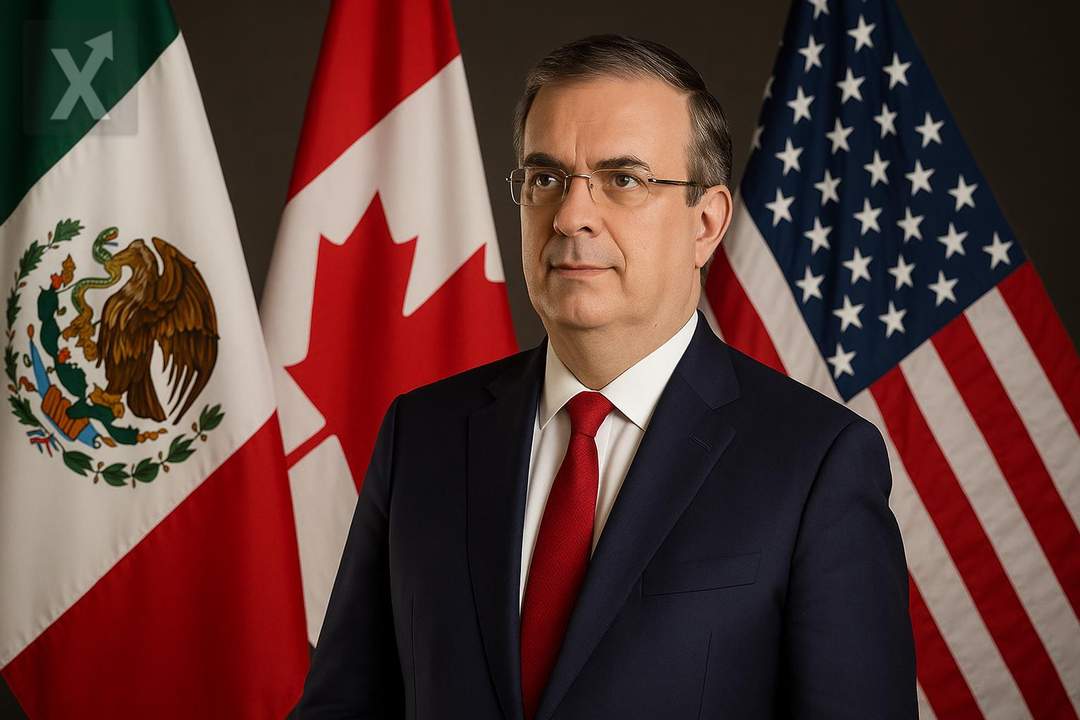
The USMCA review is entering a decisive phase for the Mexican economy, placing the Ministry of Economy—led by Marcelo Ebrard—at the center of negotiations where there is little room to maneuver. This is not just a technical chapter: for Mexico, the agreement is the framework that supports a key share of its growth, its manufacturing employment, and the investment inflows tied to regional supply chains.
The scale of trade helps put what’s at stake into perspective. In recent years, export flows to the United States have surpassed the $500 billion mark, with Canada as the second most important destination within North America. Mexico’s heavy trade dependence on the region—and especially on the United States—turns any rule change into a macroeconomic issue: shifts in tariffs, rules of origin, or sanitary measures can quickly ripple into output, sector-specific inflation, and investment expectations.
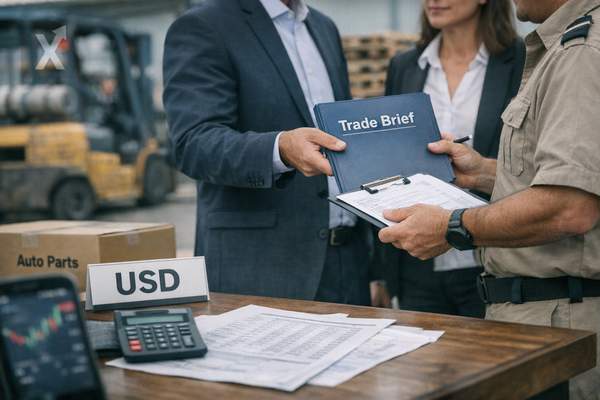
In this context, Mexico’s approach has tended to prioritize damage control and the preservation of certainty for companies operating on both sides of the border. The implicit goal is to prevent the review from turning into a full-scale renegotiation that would fracture the productive integration built since the NAFTA era: auto parts crossing the border multiple times, electronics manufacturing with tight delivery windows, and an industrial corridor stretching from the Bajío to northern Mexico, with strong logistics links to Texas and California.
The talks are also taking place in a tougher external environment. The United States has reoriented its trade policy toward economic security, supply-chain resilience, and “friendshoring.” That logic increases pressure on sensitive issues—regional content, input traceability, customs enforcement—and leaves less room for the gradual solutions that used to prevail. Even so, the high degree of interdependence acts as an anchor: overly abrupt changes would raise input costs and disrupt operations in which U.S. companies also participate.
Rules of origin, energy, and agriculture: The fronts that can move investment and inflation
Among the biggest friction points are rules of origin and verification mechanisms, particularly in industries where compliance is costly and enforcement has become stricter. For Mexico, keeping conditions that allow regional supply chains to operate without disproportionately increasing regulatory costs is critical if nearshoring is to keep bringing in projects. In parallel, the energy chapter often becomes tense because electricity and fuels weigh heavily on industrial competitiveness, especially in states with a strong manufacturing footprint. And in agriculture—where political cycles often translate into sanitary disputes or technical barriers—any restrictive episode can push up prices, create uncertainty for producers, and open the door to trade retaliation.
Mexico’s relative position as a supplier to the United States also shapes the negotiation. In recent years, the country has gained share in U.S. goods imports, driven by lower logistics costs compared with Asia, shorter delivery times, and the expansion of sectors such as auto parts, electrical equipment, household appliances, and medical devices. This increase in market share is not just a trade win: it gives Mexico more leverage to argue that USMCA stability is a regional competitive advantage versus Europe and Asia.
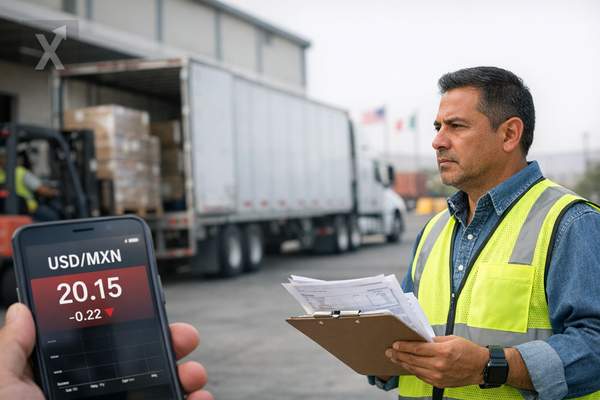
Still, the review arrives alongside domestic challenges that condition export performance. Border infrastructure is operating with bottlenecks; energy and water availability in industrial hubs has become a deciding factor; and security along logistics corridors affects transportation and insurance costs. At the same time, the Mexican economy faces the challenge of sustaining a moderate growth pace in an environment of still-high interest rates and intermittent global slowdown. On that board, the USMCA serves as a shock absorber: it reduces legal uncertainty and supports medium-term investment planning—so long as the review process does not translate into regulatory shocks.
Ebrard’s role, in practice, is to coordinate a defense of trade certainty while negotiating adjustments that respond to the political shift in the United States. The key is to distinguish between rhetorical pressure and structural change: one thing is a harsher tone or tariff threats, and another is the real ability to alter a productive framework that involves investment, jobs, and regional supply.
Looking ahead, Mexico’s main risk is not only a single sector-specific dispute, but the accumulation of frictions that affect investment decisions. If the review raises compliance costs, tightens verification, or opens the door to tariffs outside the agreement, the hit could be felt in export industries, formal employment, and tax revenue tied to manufacturing activity. If, on the other hand, the framework is preserved and changes are limited, the country can maintain nearshoring momentum and solidify its role as a production platform for North America.
Overall, the USMCA review is shaping up to be an exercise in endurance and technical precision: protecting preferential access to the U.S. market, sustaining integration with Canada, and preventing the process from eroding business confidence. For Mexico, the outcome will be a direct indicator of how solid the main engine of its open economy remains in the years ahead.