Mexico Launches Antidumping Investigations Into U.S. Pork and Apples Ahead of the USMCA Review
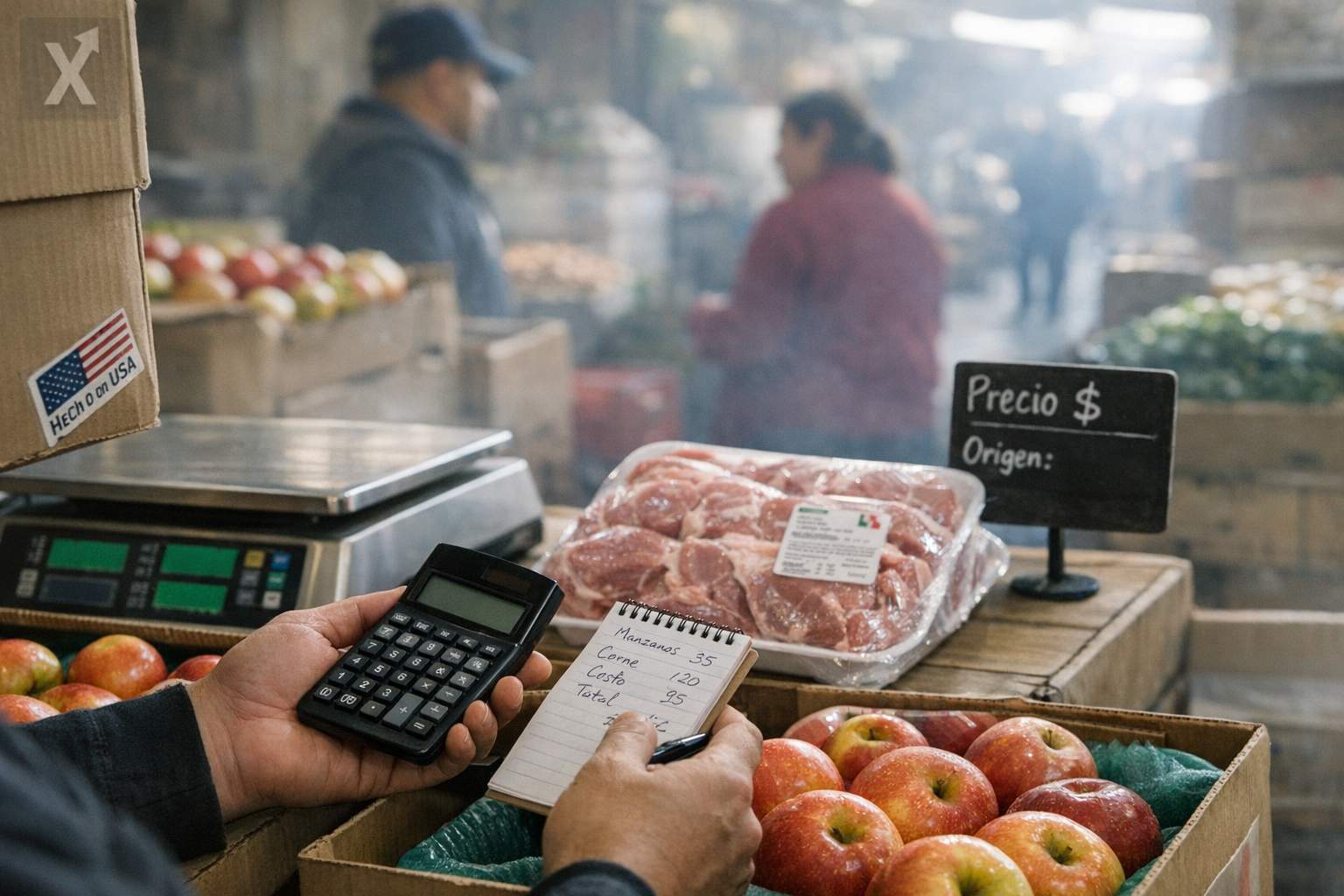
In recent weeks, Mexico’s Ministry of Economy (Secretaría de Economía) initiated two investigation proceedings over alleged dumping practices in agri-food imports originating in the United States: certain cuts of pork and fresh apples. The move comes at a particularly sensitive moment for North America’s trade relationship, as Mexico, the United States, and Canada approach the USMCA review—an exercise that typically reignites sector-specific pressure and negotiating strategies in key industries.
According to figures from the Ministry itself, Mexican purchases of U.S. pork have grown sharply in recent years, rising from $1.219 billion in 2019 to $2.615 billion in 2024. For apples, the value imported increased from $265 million in 2019 to $404 million in 2024. The increase coincides with deeper integration of regional agri-food supply chains, more efficient border logistics, and domestic demand that has remained resilient despite bouts of food inflation observed since 2022.
In the pork case, the trade authority opened an antidumping and countervailing duty (anti-subsidy) investigation into imports of leg and shoulder cuts (bone-in or boneless; fresh, chilled, or frozen) from the United States. The petition was filed by Mexican companies in the pork industry, which argue that rising imports have been accompanied by falling prices, hurting profitability and the financial performance of domestic production. The period under investigation centers on 2024, with an injury analysis covering 2022–2024—a window that aligns with an environment of volatile feed grain and energy costs, key inputs for pork production.
The case’s economic relevance is significant: the United States accounts for most of Mexico’s imported pork supply (the base text cites an 83% share). For U.S. producers, Mexico is a strategic customer and, from a market standpoint, often absorbs product when other destinations weaken. For Mexico, by contrast, the issue intersects with the challenge of balancing supply, prices, and domestic productive development. In a country where food inflation has been a sensitive factor for household well-being, any trade adjustment that raises the cost of protein can quickly pass through to consumer prices, especially through channels such as supermarkets, butcher shops, and prepared foods.
Mexico’s Ministry of Agriculture has noted that Mexico imports close to half of the pork it consumes, which makes self-sufficiency a goal that depends on investment in animal health, productivity, genetics, infrastructure, and financing—along with a logistics-competitiveness agenda. In the short run, the market operates with high cross-border integration: when external supply enters at aggressively low prices, domestic producers see margins squeezed; when it is restricted, consumers may face price hikes. The public-policy dilemma is to design measures that—if unfair practices are confirmed—correct distortions without disrupting supply.
For apples, the investigation stems from a request by producers in Chihuahua, a state that accounts for a meaningful share of national output. The core allegation points to a rising trend in imports accompanied by prices that—according to the petitioning industry—would not cover the production costs of Mexican apples, putting pressure on the domestic market. The investigation window runs from April 1, 2024, to March 31, 2025, with an injury evaluation dating back to April 2022. The scope includes all varieties of fresh apples, and the main point of tension has been the organic segment, which has shown notable growth in value.
To support opening the proceeding, the Ministry of Economy reviewed customs statistics, the trade balance, and price references, comparing export averages with cost benchmarks and domestic prices to identify whether dumping margins above minimum thresholds might exist. In practical terms, these are lengthy processes: they do not imply immediate measures, but they can result in countervailing duties if dumping and injury are proven. Mexico has investigated apple imports in the past and closed a prior case after finding no unfair practices—an antecedent that raises the evidentiary bar and suggests an active defense by U.S. exporters and authorities.
An additional factor is that both products have been linked to tariff-exemption schemes or temporary facilitation measures associated with efforts to contain price pressures on the basic consumption basket, in effect through the end of 2025 under certain conditions. In an environment where Banco de México has begun a gradual monetary-easing phase following the 2022–2023 inflation episode, food-price behavior remains a key variable for the inflation path and purchasing power. Any ruling that increases import costs could affect food inflation directly or indirectly, although the final impact will depend on substitution toward domestic supply, demand elasticity, and logistical capacity.
On the political and trade front, these cases arrive as the USMCA faces its first formal review. Historically, reviews or implementation milestones tend to amplify the voice of organized sectors and put agricultural issues at the center of the conversation, alongside recurring disputes over energy, automotive rules of origin, or sanitary measures. For Mexico, the implicit message is twofold: on the one hand, to show it has tools to respond to alleged distortions; on the other, to manage the risk of retaliation or escalation in a deeply integrated market with high productive interdependence.
Looking ahead, the outcome of these investigations will matter not only for producers and marketers, but also for the broader public-policy debate on food security, agri-industrial competitiveness, and price stability. If unfair practices are confirmed, the challenge will be to implement corrective measures that do not compromise supply or drive prices sharply higher; if they are not confirmed, pressure will remain to strengthen productivity and differentiation (quality, animal/plant health, certifications) to compete in a regional market where scale and logistics costs play a decisive role.
In sum, the launch of antidumping investigations into U.S. pork and apples reflects the natural tension between trade integration and protecting productive sectors—just as the USMCA review approaches. The key will be whether Mexico can balance defending its producers with stable supply and prices, in a context where food and inflation remain sensitive variables for the economy and for households.






